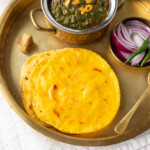
Makki ki Roti (Punjabi Cornmeal Flatbread)
Makki ki Roti is a gluten-free flatbread made with yellow cornmeal or maize flour. It is popularly served in North India, along with Sarson ka Saag (mustard greens curry). Learn how to make makki ki roti along with all the tips and tricks with this easy recipe.
Servings: 8 roti
Ingredients
- 2 cup Makki ka Aata (Maize flour) + more for rolling, about 225 grams
- 1/2 teaspoon Carom seeds (Ajwain) optional
- 1/2 Salt
- 1 1/4-2 cup Water add more as needed
- Ghee or Oil for roasting, optional
- White Butter or Ghee to spread on cooked roti (optional)
Instructions
Make Dough
- In a saucepan, add 1 1/4 cups of water and salt. Turn the flame to high and let it come to a boil.
- Turn off the flame and add the makki ka aata to the water. Mix the flour and water with a spatula. It will have a crumbly texture but will start to come together. Cover with a lid and let it rest for 10 minutes.
- Open the lid and transfer the mixture to a large plate or bowl. Apply hot water to your hands, and start to knead the dough. Use the heel of your palms to knead it. Keep kneading for 6-8 minutes until the dough is completely smooth. If the dough seems dry, add 1-2 tablespoons of warm water and knead again. The dough will be very soft by this time, and you should be able to form a ball without any cracks. Cover the dough with a wet cloth. Note: Depending on the quality and age of the flour, the total amount of water needed to make the dough can vary.
Roll Roti
- Take a small portion of the dough to form a ball. We want to work with one ball at a time. Knead the dough ball one more time until it is smooth. Apply hot water to your hands. If the dough ball seems dry, knead and make a ball again between your palms.
- Easy method: Apply some dry maize flour to the rolling board. Roll the ball in the maize flour and place it on the rolling board. Using a rolling pin, roll the roti with light hands into a 6-7 inch circle. You can also place the ball on a parchment paper to roll. This helps to make picking the rolled roti easier for the next step.
- Traditional method: Wet your hands with hot water. Take the dough ball in your hands and roll the dough between your hands in a circular motion to make a flat circle about double the size of the dough ball. Transfer this onto a parchment paper. Wet your fingers again and start patting the dough while moving the paper to roll evenly on all sides and making a circle. Don't roll too thin, as usually makki ki roti is thicker than wheat roti. If you are new to trying this method, you can make smaller 4-5 inch roti too.
Roasting Roti
- Heat a Tawa (griddle) on medium-high heat while rolling the roti. Carefully transfer the roti to the tawa. If you used parchment paper, you can also transfer the roti with it and then peel off the parchment paper. You can also place the roti directly on the tawa and peel off the parchment paper if that's easier.
- Cook the roti on one side until it has brown spots, then flip and cook the other side. If you like, using tongs, transfer the roti to the open flame and roast on both sides to get the charred look.
- Cook with ghee: Makki ki roti is often cooked like a paratha (my mom cooks this way). Once there are brown spots on one side, flip and apply ghee/oil to the roti. Then flip again, and apply ghee to the other side. Roast till the roti is well cooked.
- Transfer the makki ki roti to a plate and apply ghee or white butter. Similarly, cook the remaining rotis and serve then hot with sarson ka saag!
Video
Notes
Vegan Variation: Replace the ghee/butter applied at the end with vegan butter.
Soft kneaded dough: Kneading soft and pliable dough is the most important part of making makki ki roti. Add more hot water as needed until you can make dough balls without any cracks. Cover the dough with a damp cloth at all times.
Storing dough: You can store the prepared dough in the refrigerator for up to 2 days. Wrap the dough in a cling film or a wet cloth and store it in an airtight container.
Parchment paper: If you are having trouble rolling or transferring a rolled roti, then use parchment paper.
Thickness: Makki ki roti is thicker than whole wheat roti/chapati. So it is okay if you are not able to roll the thinnest rotis.
Serve hot: These rotis are best served hot, right off the tawa. If you need to store them, then top them with ghee and cover them with a cloth or foil to keep them warm.
Nutrition
Calories: 107kcal | Carbohydrates: 22g | Protein: 3g | Fat: 1g | Saturated Fat: 0.2g | Polyunsaturated Fat: 1g | Monounsaturated Fat: 0.3g | Sodium: 3mg | Potassium: 76mg | Fiber: 2g | Sugar: 0.5g | Vitamin A: 1IU | Calcium: 41mg | Iron: 0.4mg