
Puri Recipe (How to make poori)
Golden, airy, and perfectly puffed, Poori is the ultimate Indian comfort bread—and it's much easier to master than you think. Using my mom’s signature technique for a stiff, non-greasy dough, this guide will show you how to achieve that perfectly puffed poori every time.
Servings: 20 puris
Ingredients
- 2 cups Whole Wheat Flour 250 grams
- 1 teaspoon Oil
- 1 teaspoon Salt adjust to taste
- 1/2 teaspoon Carom seeds (Ajwain) optional
- 1/2 to 3/4 cup Water or add as required
- Oil for deep frying, about 2 cups
Instructions
Making dough
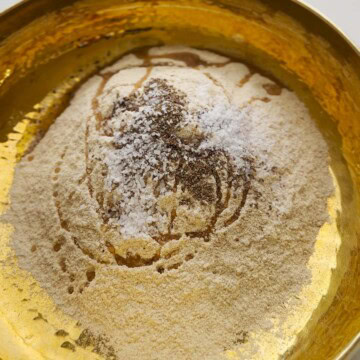
- In a large bowl or on a flat plate with high edges, place the whole wheat flour. Add salt, carom seeds, and oil. Slowly start adding water and mix with your hand. Don’t add all the water at once. Keep adding water as needed, while mixing.
- Once the dough starts to form, do not add more water. The amount of water will vary depending on the brand of whole wheat flour. Knead well to form a smooth, uniform dough. The dough should not be too soft; it should be stiff and tight for poori.
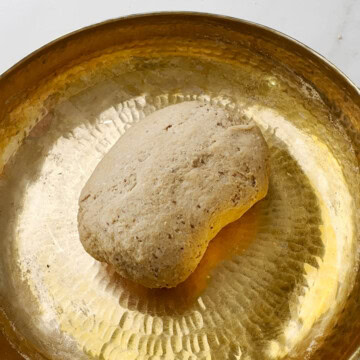
- Cover with a damp cloth or plastic wrap and let the dough rest for 5 minutes. (Note: Don't increase the resting time, as the dough hydrates more as it sits, which will result in oily pooris.)
Assembling and rolling
- Once the resting time is done, knead the dough once again. Then make 20 equal-sized small dough balls. Keep the dough and balls covered during this time so it does not dry out.
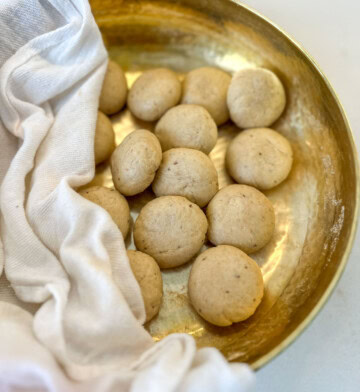
- While you are making the balls, heat oil in a deep frying pan or kadai.
- Take one dough ball and place it on the rolling board. Flatten with your fingers and apply a little oil (do not dust with flour). Roll it into a circle about 4-5 inches in diameter, applying even pressure on all sides, neither too thick nor too thin. (Thin poori might not puff properly and can become crispy)
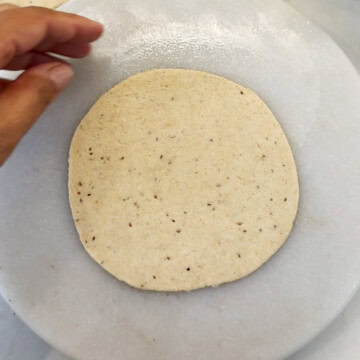
- Transfer the rolled puri to a plate or parchment paper. Roll all the pooris and line them on the plate.
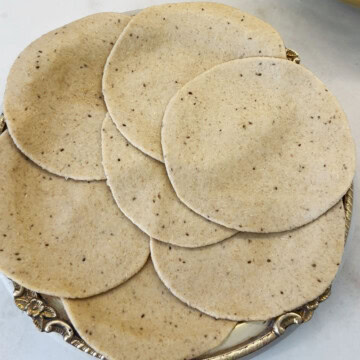
- Place the rolled poori in a plate and cover with a clean kitchen towel, so that they don’t dry up.
Frying Poori
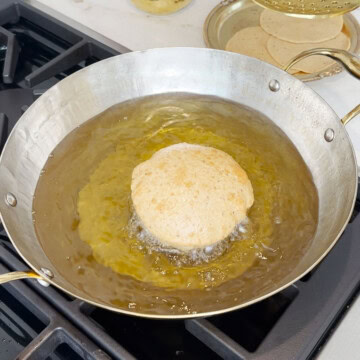
- The oil is ready when it is hot but not smoking. It should be heated to about 360°F or 180°C. You can test the oil by putting a tiny piece of dough. It should sizzle to the top if the oil is hot enough.
- Carefully add one rolled poori at a time into the oil. It should rise to the top of the oil. Gently press down on the poori with a slotted spoon; this helps it to puff evenly. Then flip over the poori with the slotted spoon and fry till both sides are golden brown.
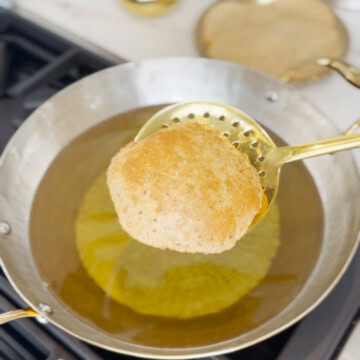
- Carefully take the puffed poori into the slotted spoon. Let any excess oil drain, then transfer to a plate lined with a paper towel. Repeat frying all the pooris.
- Serve poori hot with a curry such as chole or aloo rasedar or with sweet dishes like suji ka halwa, aamras, or shrikhand.
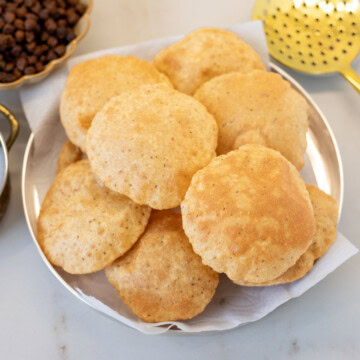
Video
Notes
Poori Dough: Keep the puri dough tight, as a soft dough will be hard to roll and won't hold up well when frying. Add a sprinkle of flour while kneading if the dough feels too loose.
Rolling: Along with adding a bit of oil to the flattened dough ball, you can lightly grease the rolling pin with oil to help keep it from sticking to the dough. Again, do not dust with flour because these particles will burn in the hot oil.
Frying: It's important that the oil is at the right temperature. If the oil is too hot, the puri will burn. However, if the oil is cold, they will become soggy. Frying oil should be between 360 and 375 degrees Fahrenheit (180 to 190 degrees Celsius). The poori should puff quickly while frying.
Nutrition
Calories: 43kcal | Carbohydrates: 9g | Protein: 2g | Fat: 1g | Saturated Fat: 0.1g | Polyunsaturated Fat: 0.2g | Monounsaturated Fat: 0.2g | Sodium: 117mg | Potassium: 44mg | Fiber: 1g | Sugar: 0.05g | Vitamin A: 1IU | Calcium: 4mg | Iron: 0.4mg