


Chicken Chettinad is a fiery and flavorful South Indian curry known for its bold spices and aromatic roasted masala. This easy recipe shows you how to make it in the Instant Pot or stovetop for a quicker take on the traditional dish. Juicy chicken is simmered in a rich, spicy gravy perfect to enjoy with rice, dosa, or paratha.
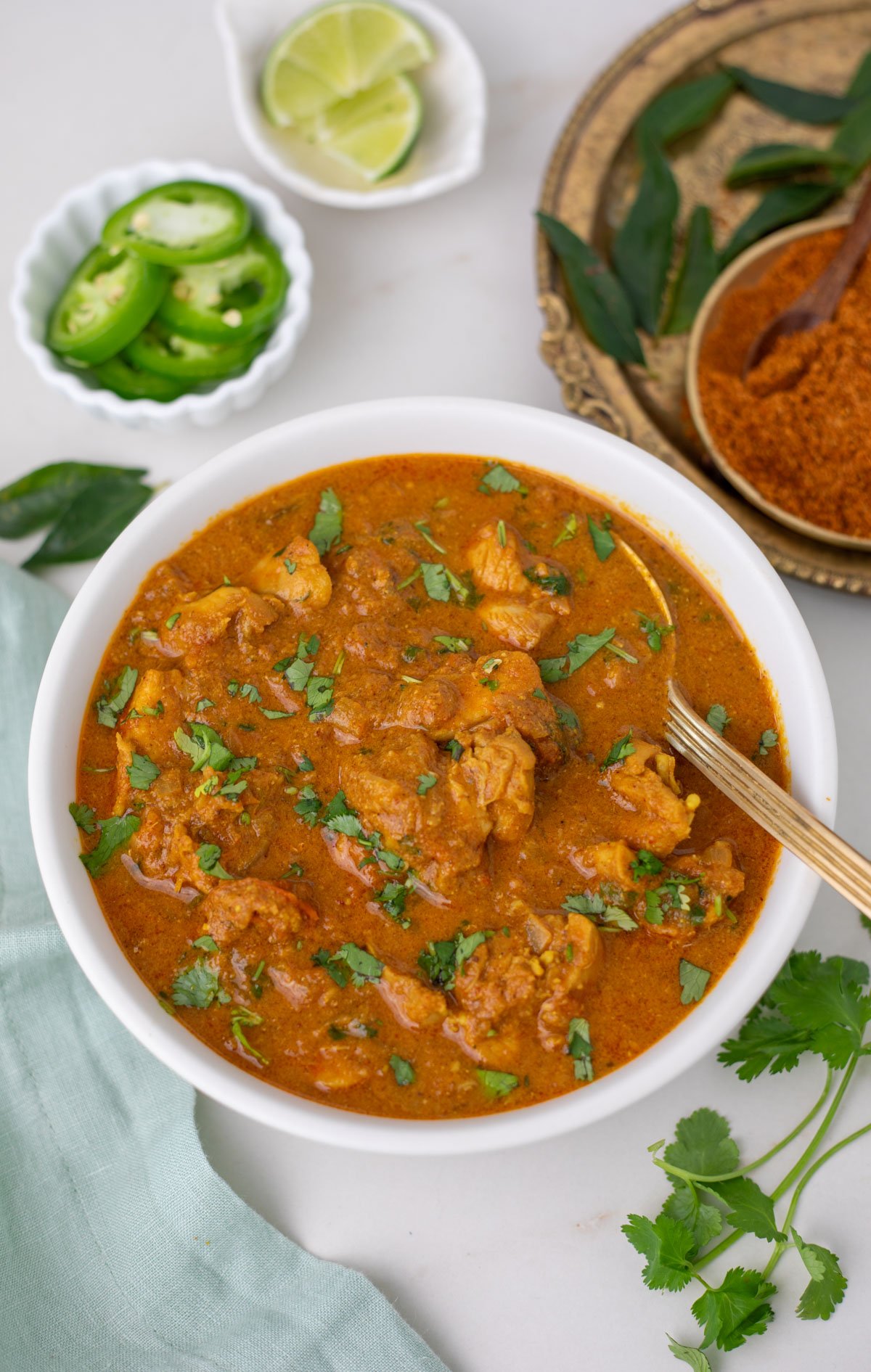
If you are new to Chettinad cuisine, THIS is the curry you want to start with. It is incredibly flavorful, slightly spicy, and a bit exotic!
Whenever I make this curry, I think my kids might not eat it as it might be too spicy. But guess what! It is so flavorful that they don’t mind the spice at all. My younger daughter even wanted the leftovers.
This curry is a crowd pleaser and perfect for making when you have company for dinner or a party, just like my chicken 65 and chicken vindaloo.
Table of Contents
What is Chicken Chettinad?
Chicken Chettinad is one of the most flavorful chicken dishes from South Indian cuisine. It is also one of the most ordered curries in a South Indian restaurant. After trying it many times, I can say it is the best South Indian meat dish.
Chettinad cuisine is from the Chettinad region of Tamil Nadu state in South India. It is perhaps the most renowned fare in the Tamil Nadu repertoire. It uses coconut and various spices, and the dishes are made with freshly ground masalas, giving them an exceptional taste.
Chettinad Chicken curry is traditionally eaten with rice, dosa, or appam, but I also enjoyed it with naan or roti.
Chettinad Masala – The Star
Chettinad masala is the heart of any authentic Chettinad curry. It’s what gives the dish its signature depth, heat, and irresistible aroma.
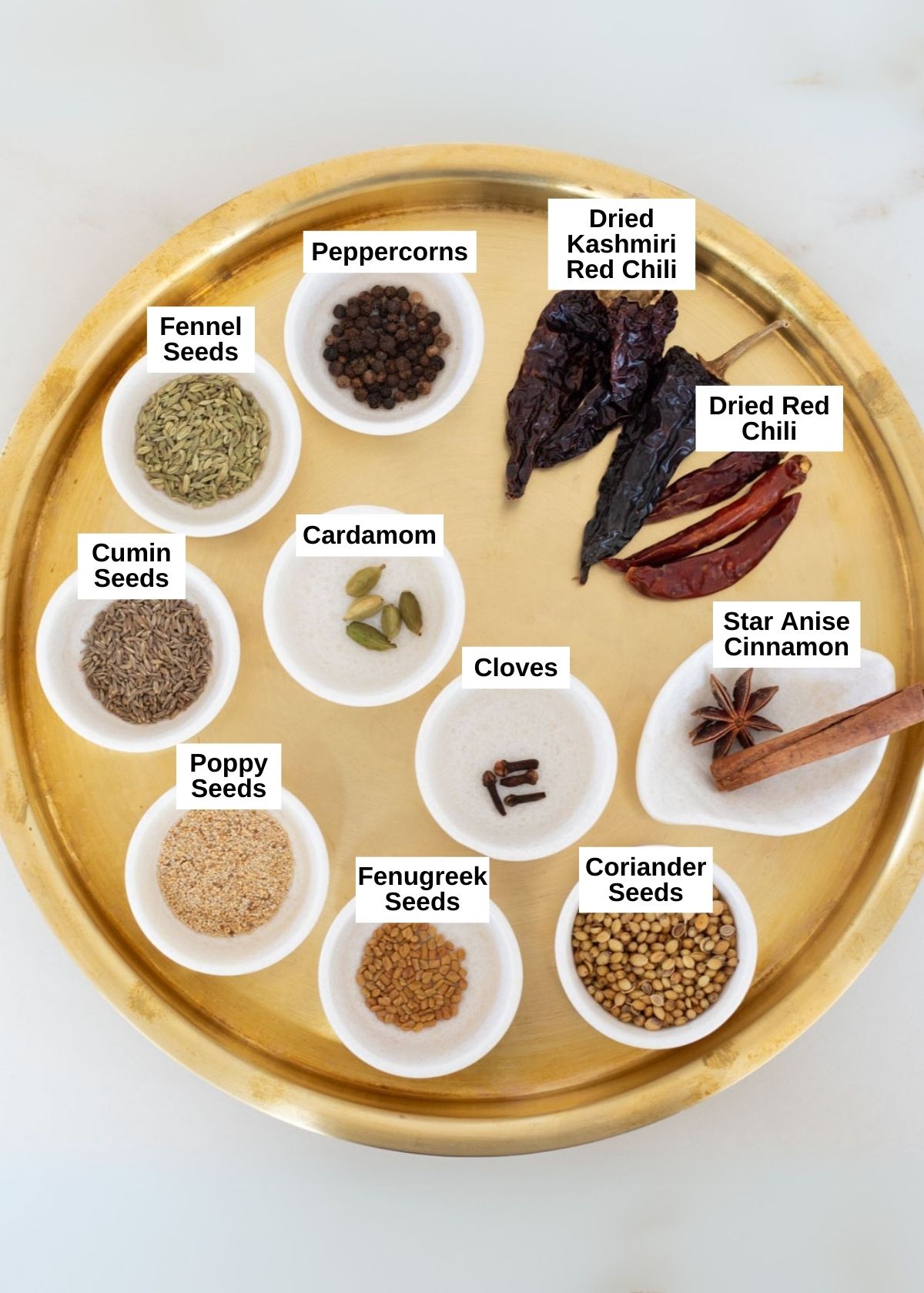
This robust spice blend is made by dry-roasting a mix of whole spices, such as fennel seeds, fenugreek seeds, cumin, coriander seeds, black peppercorns, poppy seeds, dried red chilies, cinnamon, cloves, star anise, and cardamom, and then grinding them to a coarse powder.
I like to use two types of dried red chilies in this curry: Guntur and Kashmiri red chilies. The guntur is for the heat, and the Kashmiri chili is for the red color it imparts to the dish. You can use other types of whole red chilies, but please don’t forget to adjust the quantity based on your taste.
If you can find stone flower (kalpasi), you can also add it when making the chettinad masala. I could not find it at the Indian grocery store here, so I skipped it.
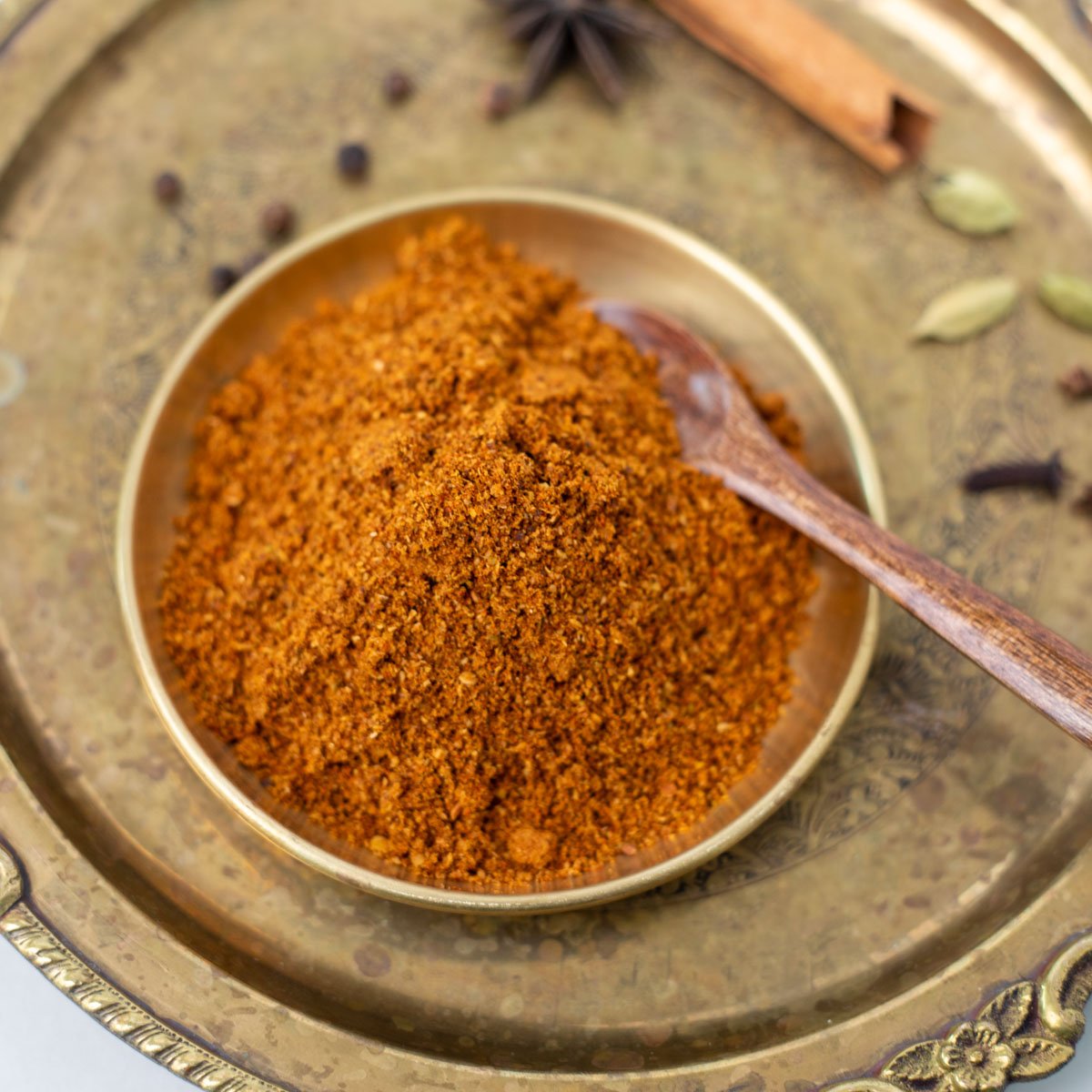
The freshly roasted spices create a warm, smoky base that’s rich and complex, layering heat and flavor into every bite. Without this masala, Chettinad chicken just wouldn’t have the bold, distinctive flavor it’s famous for.
Chettinad Chicken Ingredients
Once you have the chettinad masala ready, the ingredients are mostly the same as any South Indian chicken curry.
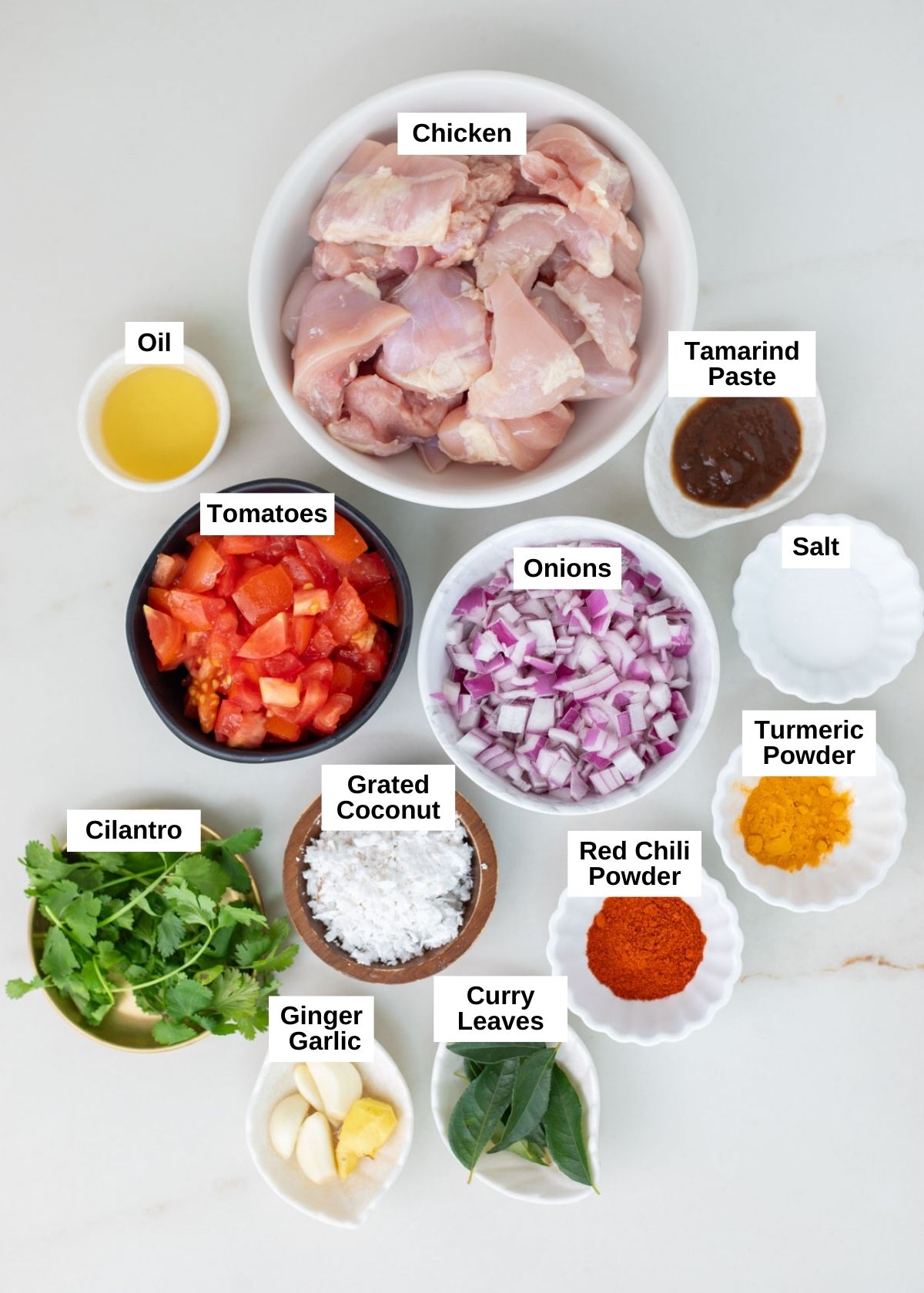
Curry Base: We use onions, ginger, garlic, and tomato for the base of this curry. If you can, use shallots in place of the onions.
Curry Leaves: A quintessential ingredient in this South Indian recipe, adding a unique aroma and taste.
Spices: The main one is the Chettinad masala. I also added turmeric powder and red chili powder for the color and flavor. Authentic recipe uses guntur chili powder, but you can use Kashmiri chili powder too.
Coconut: It is grated and lightly roasted, then ground with the Chettinad masala to make a paste to add to the curry. It adds a subtle sweetness and mellows the bold spices in the Chettinad masala. If you can’t find fresh coconut, frozen grated coconut is a good substitute. I can always easily find the frozen coconut at Indian grocery stores.
Tamarind Paste: Adds a hint of tanginess that brightens the curry. If you don’t have it, substitute with lemon or lime juice.
Garnish: Chopped cilantro leaves for garnish.
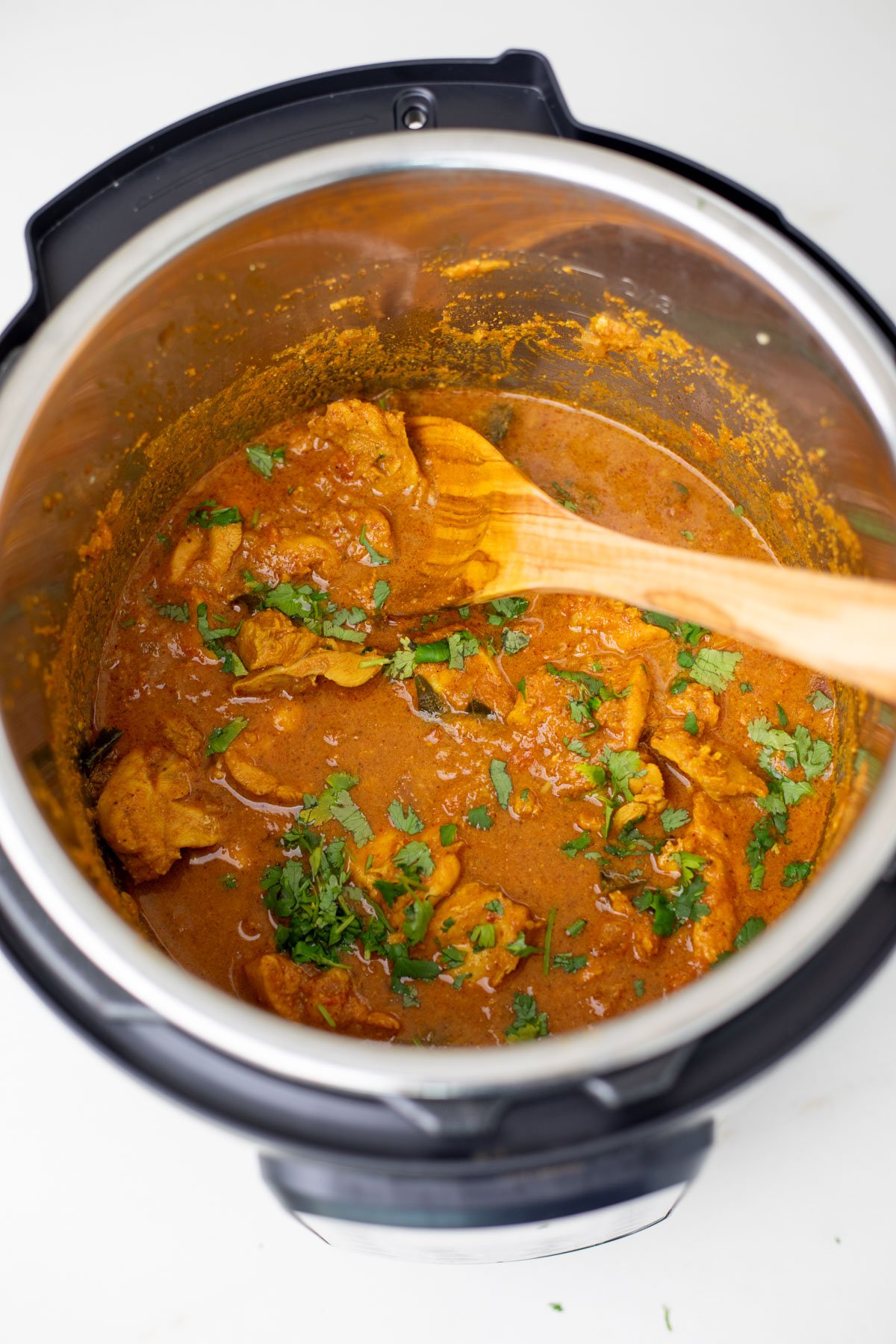
Pro-Tips
Don’t skip: Curry leaves, coconut, freshly ground chettinad masala, and tamarind, all add lots of flavor complexity to this dish. Hence, I suggest taking the time to build that flavor for this curry.
Saute the onions/shallots: Take the time to saute them and let them turn golden brown. That is what adds the real flavor to this curry.
Smooth paste: When grinding the coconut and Chettinad masala together, make sure that you get a smooth paste. Otherwise, the curry can be lumpy, which is less enjoyable.
Adjust the spice level: You can increase or reduce the amount of red chili used in the recipe. You can also add some coconut milk or cream at the end to make the curry milder.
Chicken: I made this curry using boneless chicken thighs, but you can also use bone-in chicken. For the Instant Pot method, increase the cooking time by 3 minutes.
Storage: Any leftovers can be stored in an airtight container in the refrigerator for 3 days. This curry will also freeze well. Transfer to small portioned containers, and freeze for up to 3 months. Thaw overnight in the refrigerator and reheat in the microwave or a pan on the stovetop. You might need to add 1-2 tablespoons of water to get the same consistency when reheating.
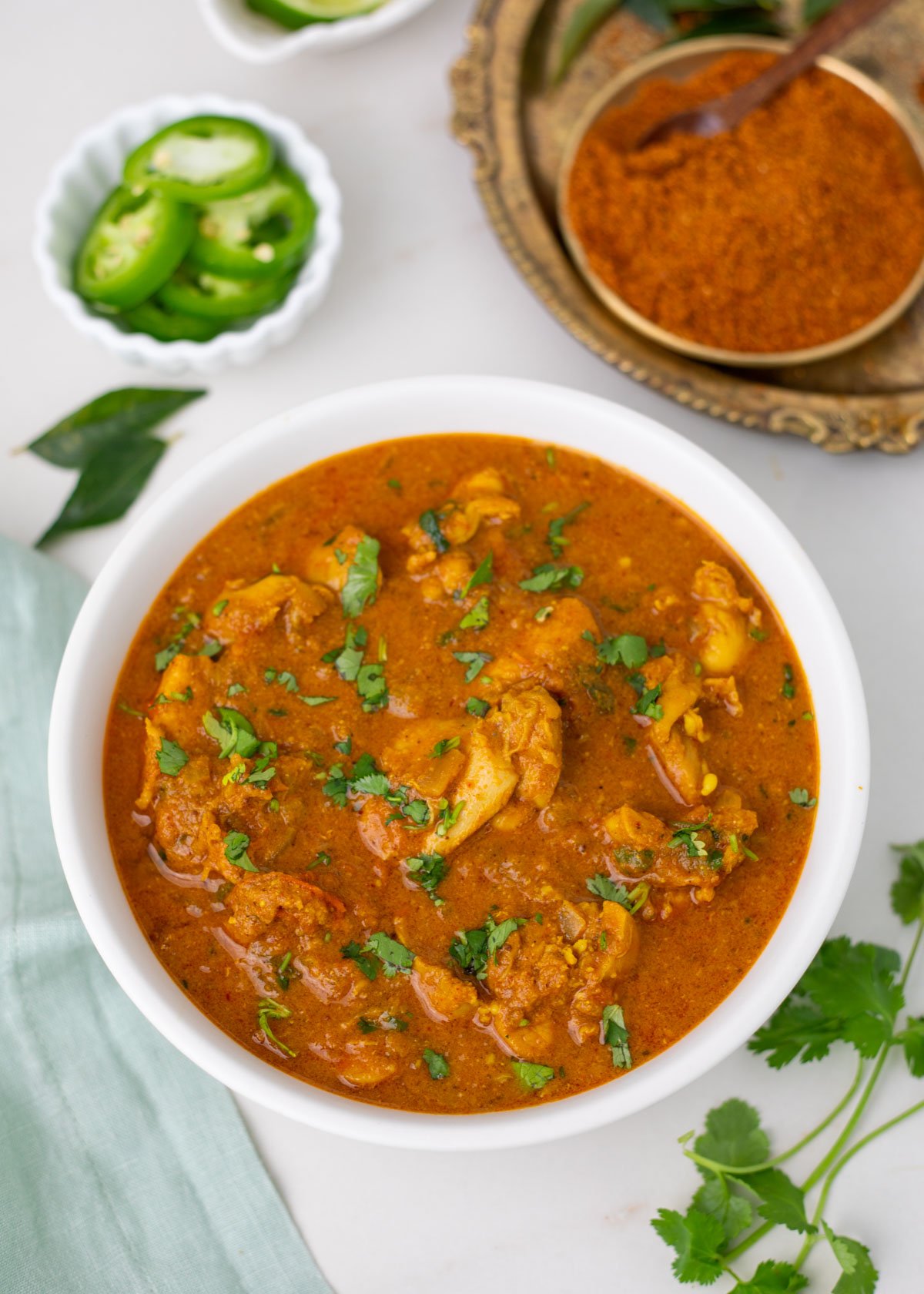
What to Serve with Chettinad Chicken?
Chettinad Chicken is bold and spicy, so it pairs best with sides that balance or soak up all that amazing gravy!
- Rice: You can serve it with plain steamed white rice or enjoy it with coconut rice or lemon rice.
- Breads: Chapati, paratha, or naan are great for scooping that sauce. You can also try the traditional appam or idiyappam with the curry.
- Sides: Add a cooling raita to mellow the bold spiciness of the curry, along with spiced onions or papadum.
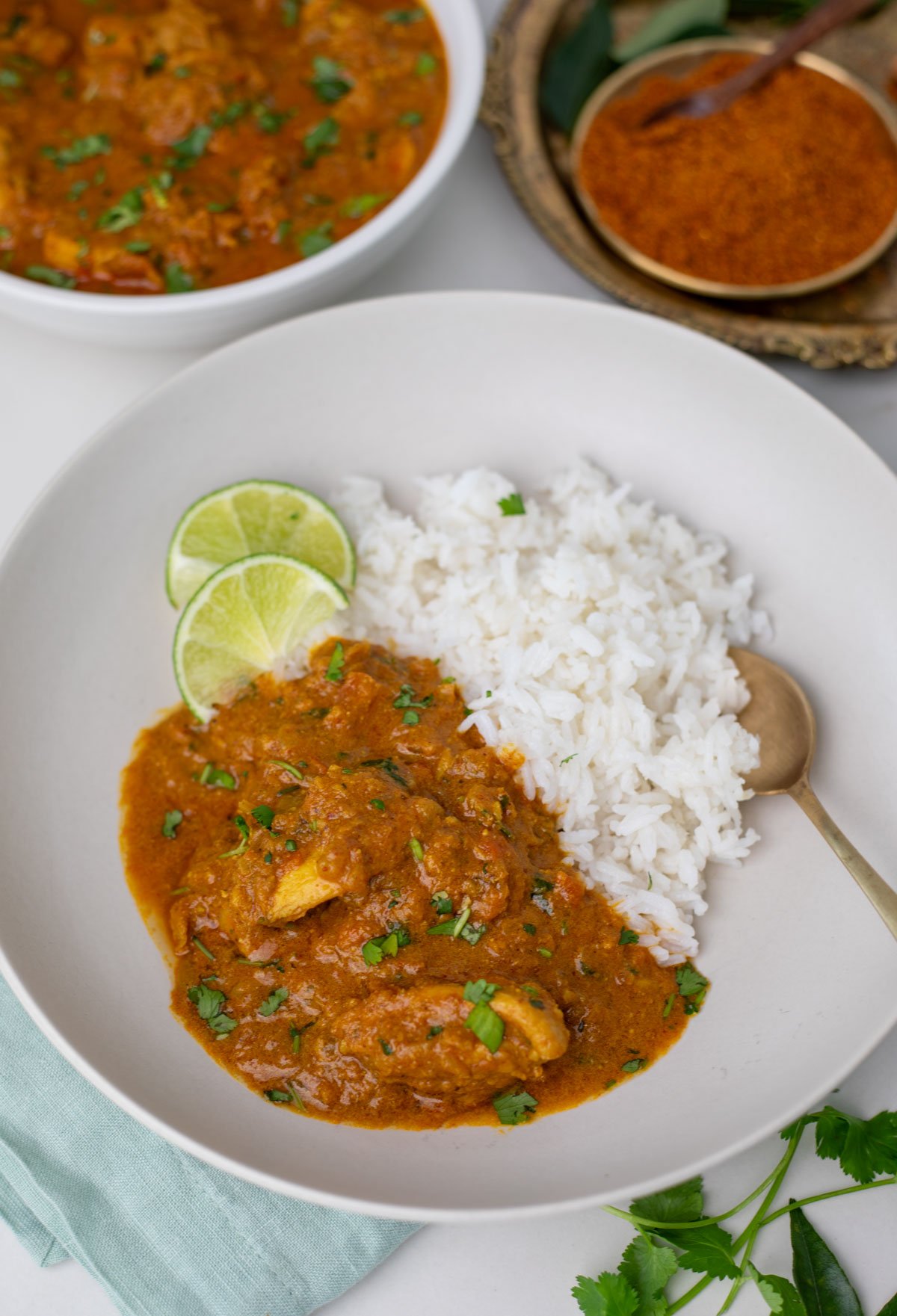
I served this curry to some friends for dinner, and they were blown away! The vegetarians were craving chettinad paneer. I have to try that soon.
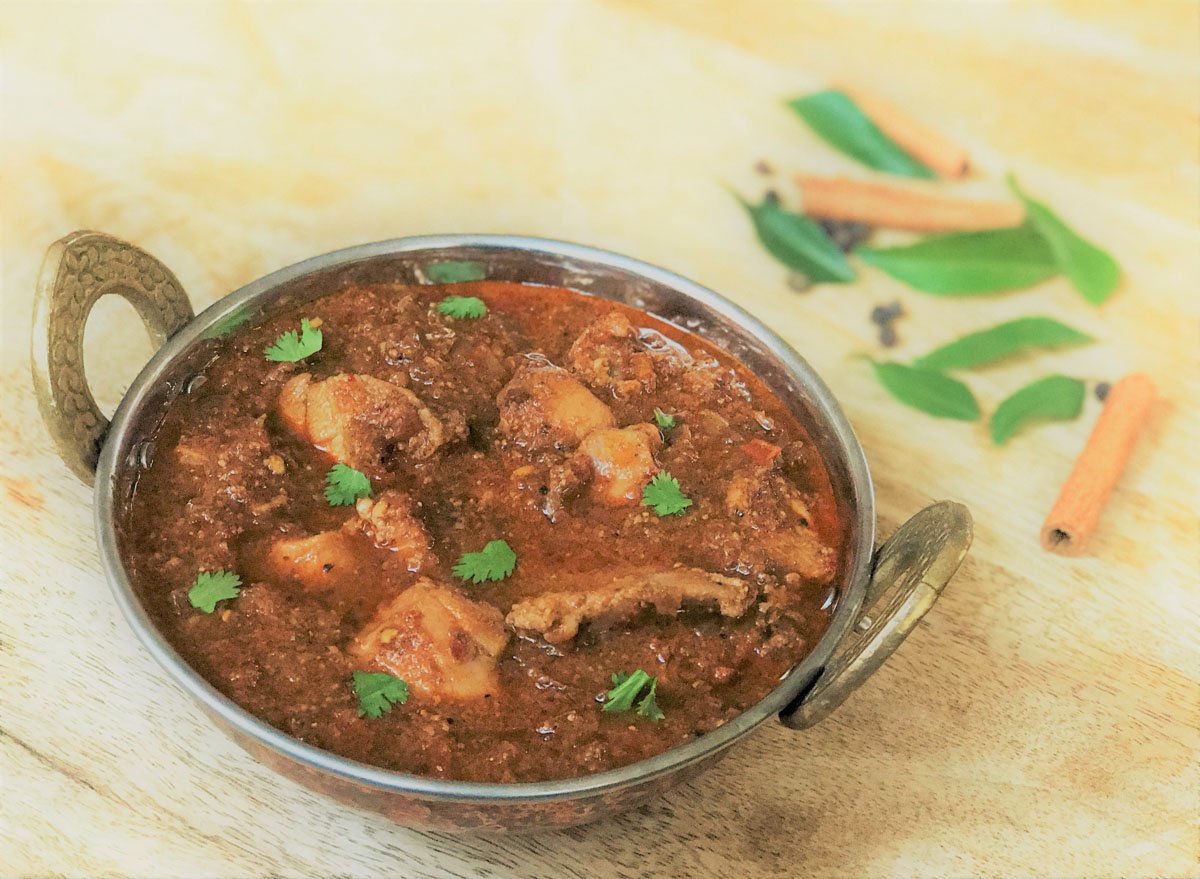
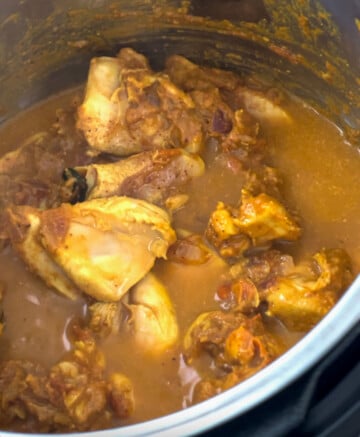
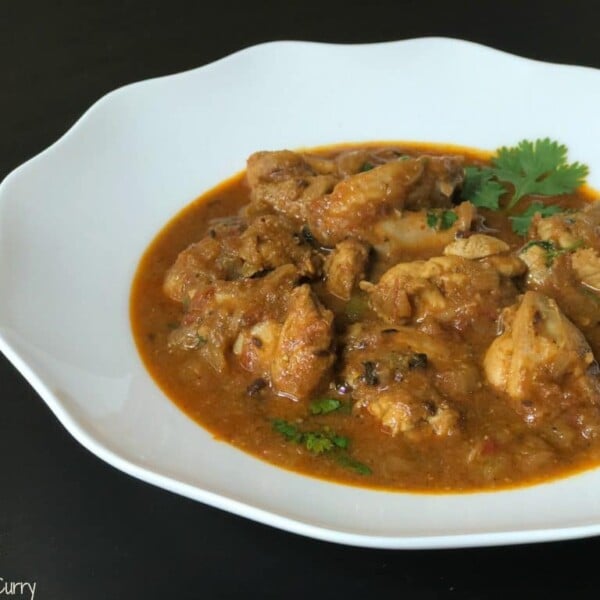
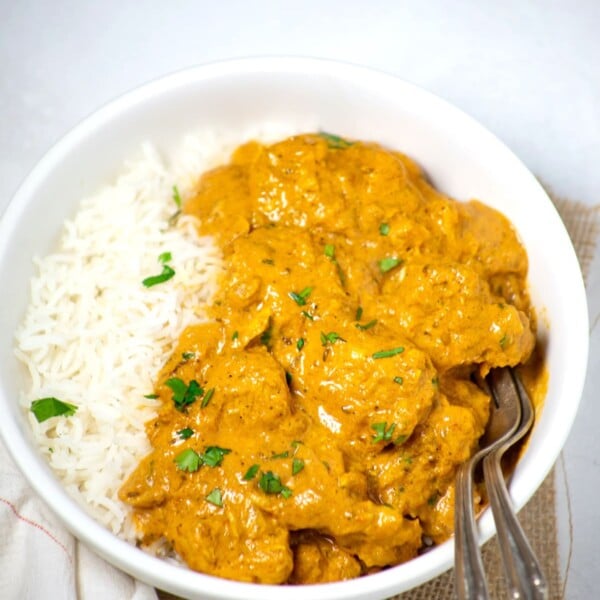
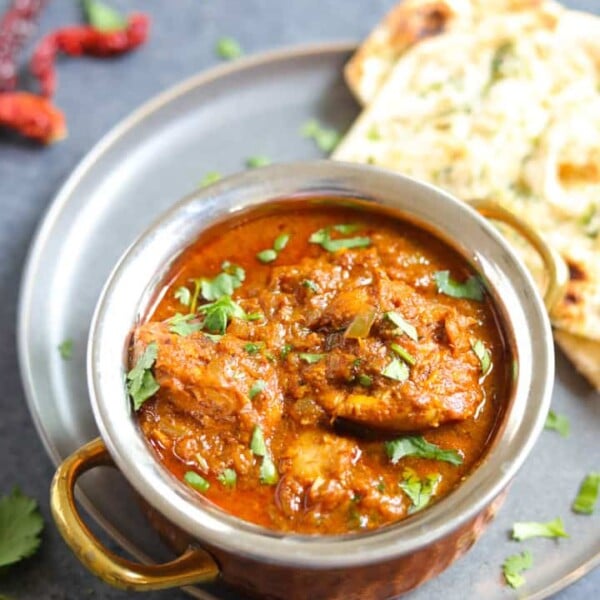
Fun Fact: Below is the pic from when I first shared this chettinad curry recipe in 2017. It is still just as delicious, but with better pictures 🙂
More Indian Chicken Recipes To Try
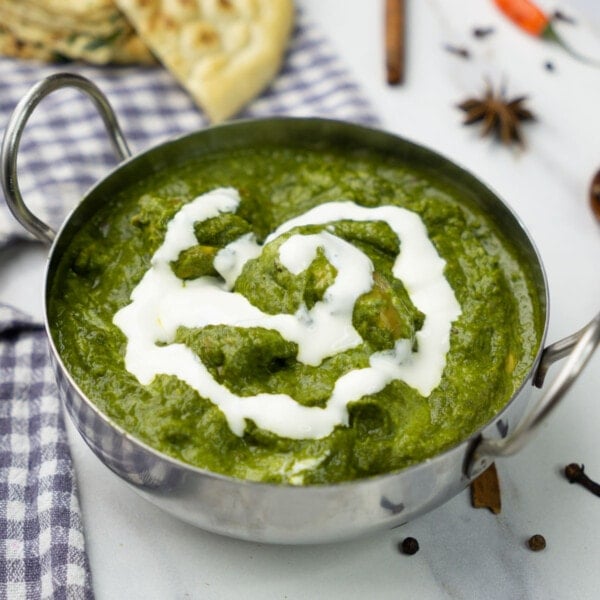
Chicken Saag (Chicken Spinach Curry)
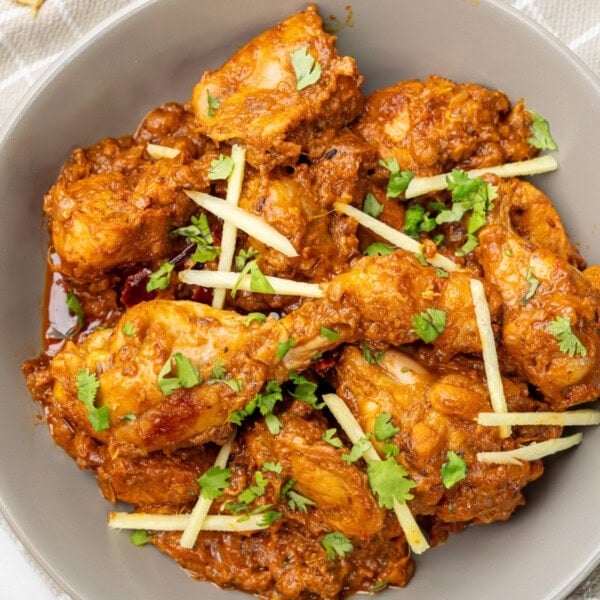
Chicken Bhuna
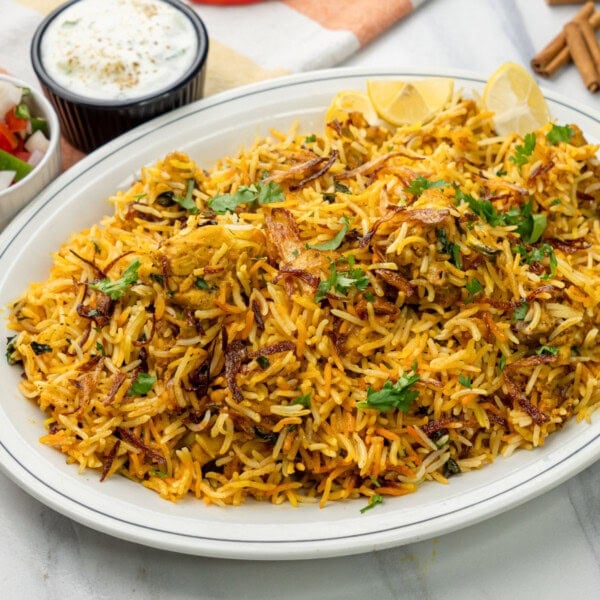
Authentic Chicken Biryani
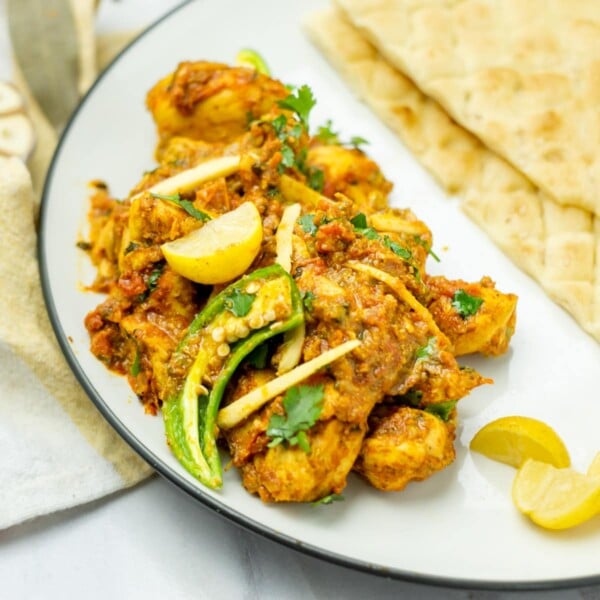
Chicken Karahi (Easy, Authentic Recipe)
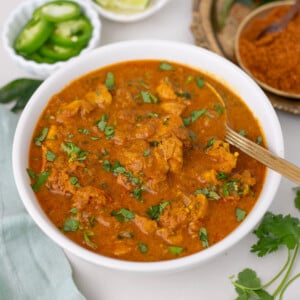
Chettinad Chicken (Instant Pot & Stovetop)
Equipment
Video
Ingredients
- 1 lb Chicken thighs, boneless, cut into pieces
- 2 tablespoon Ghee or Oil
- 10 Curry Leaves (Kadi Patta)
- 1″ inch Ginger , grated
- 5 cloves Garlic , minced
- 1/4 cup Grated Coconut, fresh or dry
- 1 cup Onion, or shallots, thinly sliced or diced
- 2 Tomato, small, diced
- 1 teaspoon Salt , adjust to taste
- 1/2 teaspoon Ground Turmeric (Haldi powder)
- 1 teaspoon Red Chili powder (Mirchi powder), adjust to taste, I used Kashmiri chili powder
- 1/2 cup Water , for cooking
- 2 teaspoon Tamarind paste
- Cilantro leaves, chopped, to garnish
Whole Spices
- 3 Dried Red Chili , I used Guntur chili
- 3 Dried Kashmiri Red Chili
- 1 teaspoon Black Peppercorns
- 1 teaspoon Cumin seeds (Jeera)
- 2 tablespoon Coriander seeds
- 5 Green Cardamom (Elaichi)
- 1 stick Cinnamon (Dalchini), about 1 inch
- 4 Cloves (Laung)
- 1 teaspoon Poppy Seeds (Khus khus)
- 1 teaspoon Fennel Seeds (Saunf)
- 1 Star anaise
- 1/4 teaspoon Fenugreek seeds (Methi dana)
Instructions
Preparing Chettinad Masala Paste
- Heat a pan on medium heat. Add all the whole spices for the Chettinad masala and dry roast them for about 30 seconds until they impart their aroma. Transfer to a grinder and grind into a powder. (Note: If you want a less spicy curry, you can remove half of the ground spice mix and store it for later use)
- Add grated coconut to the same pan and toast till lightly golden.
- Transfer the toasted coconut to the grinder. Add 2-3 tablespoons of water and grind well to make a smooth paste.
Instant Pot Chettinad Chicken
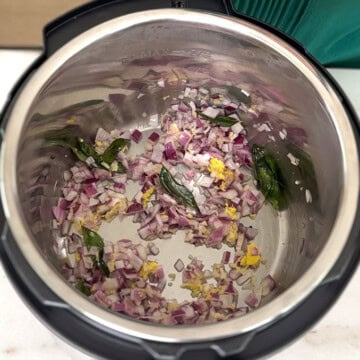
- Start the Instant Pot in SAUTE mode and heat ghee/oil in it. Add the curry leaves and saute for 30 seconds.
- Add the onions and saute for about 5-6 minutes until they are golden. Add the ginger and garlic and saute for another minute.

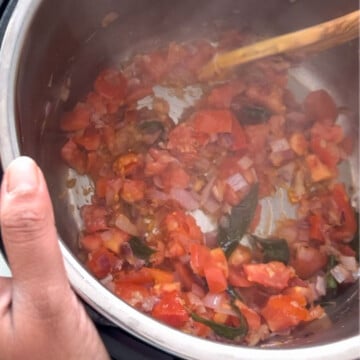
- Then add the diced tomatoes and saute for 2-3 minutes.
- Add the salt, turmeric, and red chili powder. Mix it all well.
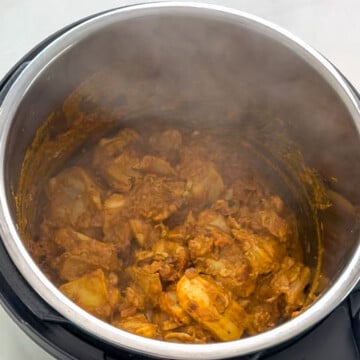
- Add chicken pieces and the ground paste. Saute for 4 minutes until the outside of the chicken turns white. This is an important step that infuses the spices into the chicken.
- Add water for cooking. Press CANCEL and close the pressure cooker lid with the vent in the sealing position.

- Change the setting to pressure cook mode on high pressure for 5 minutes. When the pressure cooker beeps, do a quick pressure release and open the lid.

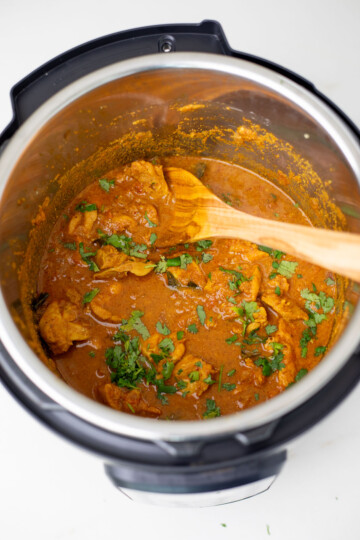
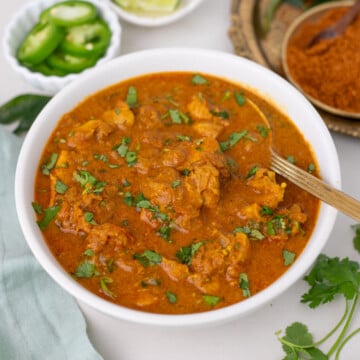
- Add the tamarind paste and stir it into the curry. Garnish with chopped cilantro, and Chicken Chettinad is ready to be served.
Stovetop Pressure Cooker
- You can follow the same steps as the Instant Pot method to make this curry in a stovetop pressure cooker. Pressure cook on medium flame for 2 whistles, and let the pressure release naturally.
Stovetop Pan Method
- Heat a heavy-bottom pan on medium-high heat. Add ghee or oil to it, and let it heat. Add the curry leaves and sauté for about 30 seconds so they release thier aroma.
- Add chopped onions and sauté for about 6-8 minutes until the onions are golden. Add ginger and garlic, and sauté for another minute..
- Then add the diced tomatoes and saute for 2-3 minutes. Add the salt, turmeric, and red chili powder. Mix it all well.
- Add chicken pieces and the ground paste. Saute for 4 minutes until the outside of the chicken turns white. This is an important step that infuses the spices into the chicken.
- Add water for cooking. Cover and cook the chicken on low heat for 15-20 minutes. Stir a few times in between. Then, remove the lid and check that the chicken is cooked through.
- Add the tamarind paste and stir it into the curry. Garnish with chopped cilantro, and Chicken Chettinad is ready to be served.









Before I make this I have a question. In the recipe directions for the spice blend, it says, “Grind to a powder or if needed add some water to make a paste.” How do I know if it’s “needed”? Do I want a powder or a paste?
Hi Lexie – Great question. I usually grind to a powder. However if you are not able to grind to a fine powder due to the blender you are using (maybe it is bigger or not as powerful), then it is okay to add water to make a smooth paste. Either way works as it is going to get mixed in thee curry. Hope you enjoy it!
That was an absolutely delicious recipe (my third from Piping Pot Curry so far)! I’m fortunate to have a wonderful Indian market about 2 miles from my house, and got all the ingredients there.
But I had a question: I dutifully ground all the whole spices in a little spice grinder I have, but there was such a large volume of spices compared to the other ingredients, that even though I did deglaze with water as the recipe called for, I still had some sticking of ingredients and ultimately got the “burn” warning from the Instant Pot. So what I’m wondering is, instead of doing all the grinding of whole spices next time, can I put them in a spice pouch instead? And if so, do I need to increase the quantity of some of the whole spices?
Oh, one other question: instead of chopping up tomatoes, is it possible instead to substitute some tomato puree, and if so, how much? I love the recipe, but would love to make it a bit more easily!
Thanks!
Hi Donald – I know we discussed over email, but I wanted to share here for others reading the comments. The spice pouch is usually for whole spices. However, in this curry, it is best to grind the spices. If the curry sauce was not too thin for your taste, it would be totally fine to add some extra liquid before cooking. Typically chicken releases a lot of liquid when cooked, and that adds to the liquid in the pot. However, newer instant pots are also more sensitive to burn which is an added reason for the issue.
You can surely use canned tomato puree. I would use about 1/2 cup tomato puree. I would suggest adding the tomato puree on the top after adding all the other ingredients before pressure cooking. Sometimes thick tomatoes puree can also cause a burn.
This curry will also cook wonderfully on a stovetop pan. The same method would work. You will just have to cover and cook the chicken until it is cooked through, which usually takes about 15 minutes.
I am so glad that you enjoyed the taste of the curry and would like to make it again.
Just made the chicken chettinad, smells delicious. I have a whole packet of the curry leaves leftover, what can I do with them.
Thanks
Hi Rose – You can freeze the curry leaves to use whenever you make another curry. See more details here – https://pipingpotcurry.com/curry-leaves-use-store/. I have also included links to recipe ideas where I use curry leaves 🙂
We are looking forward to making a vegetarian version of this. What suggestion would you have to trade out the chicken? Would garbanzo beans be an option? Also, can the spice blend be made 2-3 days in advance and stored in an air right container in fridge? Many tanks!
Hi Sarah – Absolutely, you can make the spice blend in advance. Lightly sautéed paneer or tofu could be great options. You can also add roasted cauliflower or a can of garbanzo beans to this curry. Hope you enjoy it!
The onions and spices need to cook WAY longer than the 2-3 minutes that your recipe recommends. I tried following the recipe very carefully, and there whole whole chunks of onions and spices floating in the final version, very gritty. That should never happen with any Indian food. Recipe needs adjustment.
Hi Farah – Indian food is so diverse and versatile. In some curries, onions added as chunks and some they are blended. And of course, there is personal preference. In my experience, when onions are pressure cooked, they completely soften and mix with the food. I dice the onions finely, and then only sauté them for 2-3 minutes. Then after opening the pot, you can mix the curry well with a ladle and the onions mix completely. Of course, you can sauté the onions for longer and that would work great in this recipe too. You can also blend the onions after sautéing if you prefer to have a smooth curry. Thank you for sharing back your feedback.
Took me 8 minutes to cook the chicken. but the recipe turned out to be very delicious~! Thanks
Hi Amardeep – Glad to hear you enjoyed the curry!
In our local Indian restaurants, they say the Chettinad has star anise. Do you recommend that?
Hi Nancy – Sure, feel free to add 1-2 when making the spice blend. It will work great!
Delicious! I followed your recipe exactly, down to the fresh curry leaves (which I finally found at a specialty India Grocer store in downtown Boulder). Thank you again for sharing your wonderful creations!
This was super delicious!! I’m curious if you use black poppy seeds or white poppy seeds? Ours turned out great with the white poppy seeds but I’m not sure if those are the best ones to use.
Thanks for the fantastic recipe! 🙂 Can’t wait to make it again!
Hi Charlotte – I used white poppy seeds, so you got it right. So happy to hear you enjoyed the Chicken Chettinad!
I am new to Indian cooking and would like to make this for the first time tonight. I don’t know if the dried chillies I have are Kashmiri chillies or not. The package just says “Whole Chillies” (Swad brand) and the ingredients are “red chillies whole.” Are these OK to use in this recipe? I like spicy, but don’t want to use too much. If these are not the correct chillies, but I can still use them, how many would you suggest using? I can’t wait to try this, Thank you!
Hey Vicky – If the package does not say kashmiri chili’s, then they are definitely another variety and can be spicier. I would say half the quantity. I hope you enjoy the curry 🙂